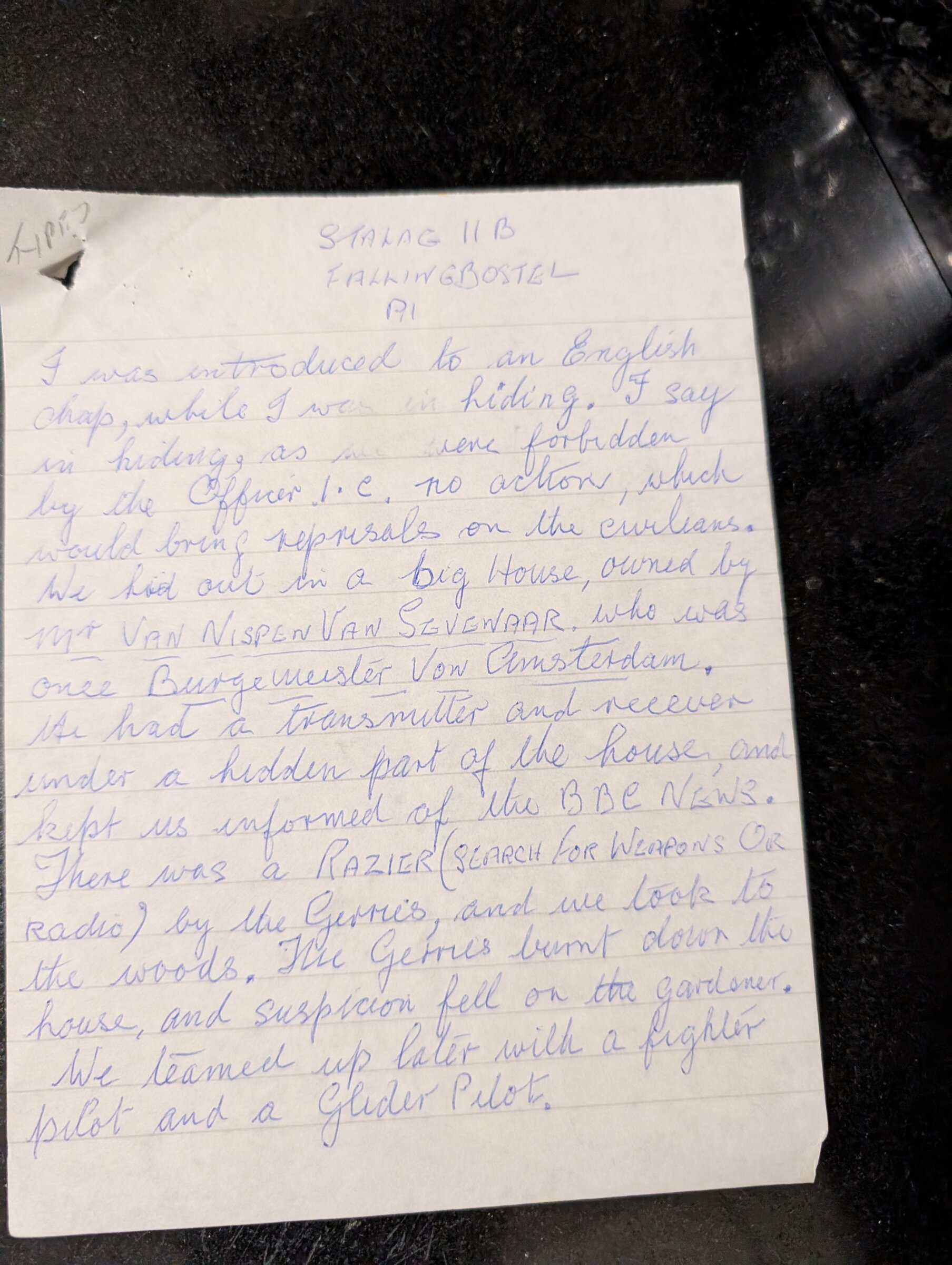
Sgt Harding
"Sgt. HARDING, 10 Para Bn", as Sam Walsh's MI9 report names him; no source gives his first name or his number.
About: A sergeant of the 10th Parachute Battalion who, by Sam Walsh's MI9 report, joined Walsh and Murphy at Dr Kruimel's house De Ruif at Garderen a few days after they came, stayed on when they left, and had gone before the Germans burned the house on 23 October 1944.
Unit or role: ✓ A sergeant of the 10th Parachute Battalion: "Sgt. HARDING, 10 Para Bn" in Walsh's report (the report), "Sergeant Harding van het 10th Parachute Battalion" in the Airborne Magazine (Somford), and in Wolter Noordman's book a sergeant "die bij hetzelfde bataljon hoorde" (who belonged to the same battalion) as Tex Banwell (Noordman, p. 292). Rank and battalion are all any of them gives.
Where: De Ruif, Dr Johannes Kruimel's house on the outskirts of Garderen, in October 1944.
Evidence: ✓ Sam Walsh's MI9 report of 7 March 1945, as the Pegasus Archive transcribes it (the Kew entries for the report are on Walsh's page; not digitised, not seen); ◐ Somford, "Op zolder bij Oom Joop", Airborne Magazine nr. 27, 2023; ◐ Noordman, Schuilplaats de Veluwe (Omniboek, 2019), pp. 292 and 300.
Nothing is known of him before De Ruif: no source gives his first name, number, company, or how he came to Garderen. A search of Kew's catalogue for "Harding" in the MI9 reports, the prisoner-of-war cards and the award recommendations found no sergeant of the 10th Battalion (the missing-men and liberated-prisoner series returned no records for the name at all, so they tell us nothing); the Hardings there on cards as Army Air Corps or Parachute Regiment are three privates and a corporal, one of the privates taken at Arnhem and one in Tunisia in 1942, none a sergeant and none tied to De Ruif. Two cards for a Sergeant Harding with no unit, number or date given (WO 416/162/32 and 37), and a third for a Harding with no rank either (WO 416/162/35), all carry "Date of Death: Dead", which bears on whether any could be him, and are not resolved (the searches, 28 October 2026).
With Murphy
Link to the section With MurphyDe Ruif, October 1944
Link to the section De Ruif, October 1944✓ Walsh's report has Walsh and Murphy taken "on 14 Oct after dark" to Garderen, to "a fairly large house on the outskirts of the village owned by a member of the Underground known to me as Uncle JOOP", with "the Burgermeister of a township near AMSTERDAM together with his wife and son" living there (Walsh). The house was De Ruif, Kruimel's, and the mayor is identified on Jhr Hubert van Nispen tot Sevenaer's page as the mayor of Laren; Noordman says only that the mayor's family came from Laren and was called Van Nispen tot Sevenear (Noordman, p. 299). Harding came after them:
A few days after we arrived there we were joined by Sgt. HARDING, 10 Para Bn. He actually stayed on there after MURPHY and I had left, but when we met later on my journey he told me that the Germans had accidentally discovered the cellar and radio set, etc, which Uncle JOOP kept there and in reprisal burned down the house. Fortunately for him HARDING had already left when this happened. Uncle JOOP was also away at the time and the Burgermeister and his family were not molested.
— MI9 · Pte S. Walsh, C Company, 156 Parachute Battalion · report of 7 March 1945 · the report
- When he came. "A few days" after Walsh and Murphy, by Walsh's report, so a few days after 14 October by its dates. ◐ The Airborne Magazine has the same order with an earlier start: Walsh and Murphy arrive "Omstreeks 8 oktober 1944" (around 8 October 1944), and "Een paar dagen later komt Sergeant Harding van het 10th Parachute Battalion aan bij De Ruif" (a few days later Sergeant Harding of the 10th Parachute Battalion arrives at De Ruif), before Lipmann Kessel and the medics (Somford). The dates for Murphy's arrival are not settled (below).
- Who was there.
- Kruimel and the Van Nispen family (Walsh; Noordman, p. 299).
- Tex Banwell, a sergeant of the same battalion: the Airborne Magazine has him come to Kruimel after the Putten ambush of 30 September and leave on 22 October (Somford). ◐ Noordman says Banwell met Harding there: "Hier ontmoette hij sergeant Harding die bij hetzelfde bataljon hoorde" (here he met Sergeant Harding, who belonged to the same battalion) (Noordman, p. 292).
- ◐ Liesbeth Verweij, who came from Elspeet to fetch Walsh and Murphy, wrote that "er op ‘De Ruif’ zeven parachutisten tegelijk waren" (there were seven parachutists at De Ruif at once) and that she ate with them and the Van Nispen family; she names none of them, so whether he was one of the seven is not known (Noordman, p. 301).
- Murphy and Walsh leave. "About 21 Oct", by Walsh, the two were moved to "a house in ELSPEET" (Sterrehoveke, which Noordman, p. 300, spells Sterrenhoveke) "to make room for a party of six R.A.M.C. officers who were expected"; Harding "stayed on there" (Walsh; Noordman, p. 300). ⚠︎ The date is disputed: Verweij has the move made about 10 to 11 October and Hardy found Murphy at Elspeet on 19 October (below).
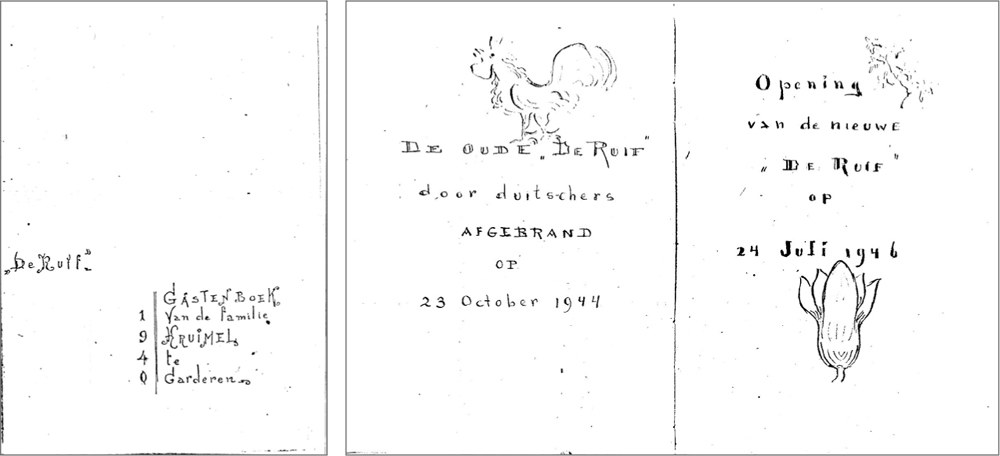
- He leaves before the fire. He "had already left" when the Germans found the hiding place (Walsh). Kruimel's guestbook dates the fire: "De oude „De Ruif” door duitschers afgebrand op 23 October 1944" (the old De Ruif burned down by Germans on 23 October 1944) (Noordman, fig. 2, p. 16; Kruimel's page). So he left De Ruif after Walsh and Murphy did and before 23 October: between 21 and 23 October on Walsh's date, or as early as about 11 October on Verweij's; no source says when, or where he went.
Noordman's Dutch rendering of the same passage of Walsh's report is on p. 300 of his book, where the place found is "de schuilhut … met daarin de zendapparatuur" (the hiding hut with the radio equipment in it) (Noordman, p. 300).
✓ He was still free after the fire: Walsh met him again "later on my journey" and heard the story of the fire from him (Walsh). Walsh does not say where or when; his own report runs on to the day he "finally reached safety on 7 mar" 1945. What became of Harding is not known.
Where the sources disagree
Link to the section Where the sources disagree- When Murphy and Walsh reached De Ruif, and so when he did. 14 October in Walsh's report; "Omstreeks 8 oktober 1944" in the Airborne Magazine and in Noordman (p. 296), and Banwell's and Walsh's guestbook pages are dated 8 October (◐ the day and month on Walsh's page are clipped on the print, as his page says) (Walsh; Somford; Noordman). ⚠︎ Not settled; the arguments are on Walsh's page. Walsh and the Airborne Magazine both have him come "a few days" after the two.
- When he left De Ruif. After Walsh and Murphy did, and before the fire of 23 October, so the window depends on when they left: "About 21 Oct" by Walsh, about 10 to 11 October by Liesbeth Verweij, and by 19 October at the latest by Hardy, who found Murphy and another paratrooper at Elspeet that evening (Walsh; Noordman, p. 301; Hardy; the arguments are on Walsh's page). ⚠︎ Not settled; on Walsh's date Harding left between 21 and 23 October, on the others he could have left any time from about 11 October.
- The Van Nispen family at the fire. Three versions.
- Walsh, from Harding, has the Burgermeister and his family "not molested" (Walsh).
- Noordman's Dutch rendering of Walsh (p. 300) has instead "De rest van de bewoners waren op dat moment niet thuis" (the rest of the residents were not at home at the time) (Noordman).
- The Airborne Magazine has "Van Nispen tot Sevenaer en zijn gezin weten te ontkomen" (Van Nispen tot Sevenaer and his family manage to get away) (Somford).
- By what he told Walsh, Harding had left before the fire, so his account of it is hearsay; the family's own papers are on Van Nispen's page.
- Who was at De Ruif for the search.
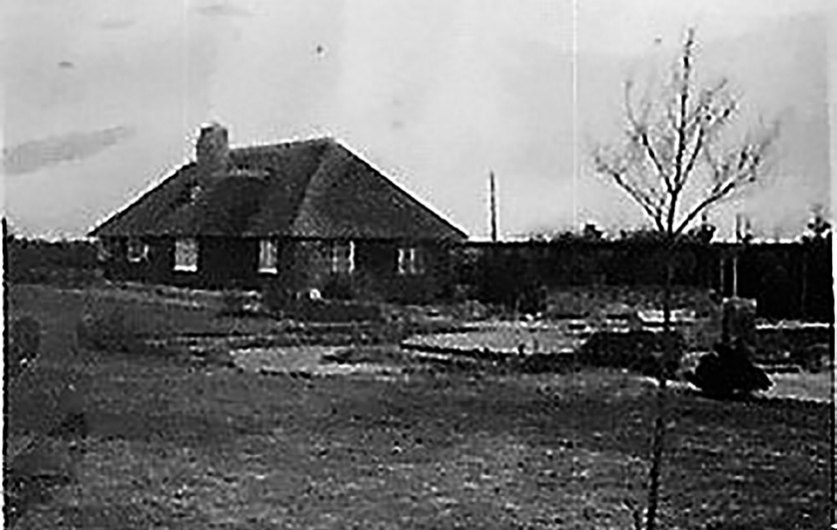
- ◐ Murphy's own notes have him at a house of Mr "VAN NISPEN VAN SEVENAAR", which we take to be De Ruif: "There was a RAZIER … by the Gerries, and we took to the woods" (his Fallingbostel notes, p. 1; read on the image; the notes do not name De Ruif, Garderen or Harding).
- Walsh has himself and Murphy gone by then, and Harding, who told him of the fire, gone too. ⚠︎ Not settled from Harding's side: what he said reaches us only through Walsh. Verweij and Hardy also have Murphy at Elspeet by then (Van Nispen's page).